My Father's Lesson on America
Dear Neighbor,
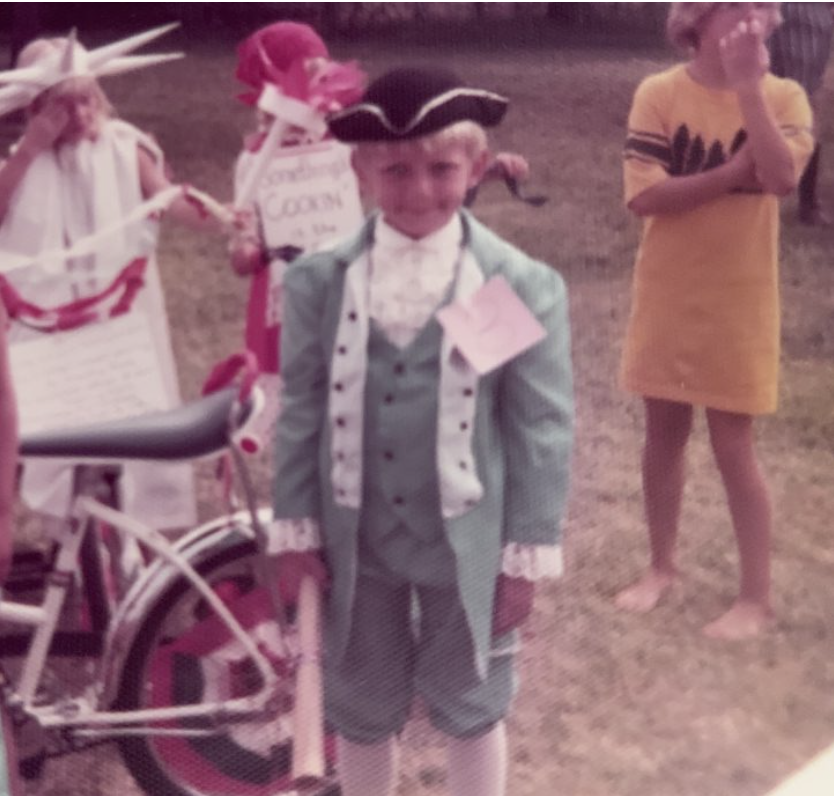
As a child, I remember the 1976 Bicentennial and wondering where I would be—and where my country would be—at its 250th anniversary in the far-off year of 2026.
Now that anniversary has arrived. Like many Americans, I have mixed feelings about where we find ourselves today. In an era of toxic rhetoric and policies I often disagree with, I found it harder than I expected to feel the sense of joy this milestone deserves.
Then I remembered a story, about my father, that informs my optimism and confidence in America and our future.
I first heard it in 1991, when I began my career as an aerospace engineer. A senior scientist approached me and asked if my father was, perchance, Dr. Jaroslaw Sobieski.
He had been one of my father’s engineering students in 1968. He described my dad as the quintessential Eastern European immigrant professor: a heavy accent, impeccably dressed, all business, relentlessly teaching derivatives, calculus, and higher mathematics, while tolerating no nonsense from his long-haired hippie students.
Then came June 6, 1968.
The day after the assassination of Robert F. Kennedy—just weeks after the murder of Martin Luther King Jr., and amid the turmoil of the Vietnam era—my father walked into class, sat on the edge of the desk, and announced that he did not want to teach engineering that day. Instead, he wanted to talk about America.
He had arrived in the United States only two years earlier after surviving the Nazi invasion of Warsaw and years of Stalinist and Soviet domination. His perspective had been forged by experiences few Americans could imagine.
America, he told his students, is exceptional.
It is a young and optimistic country with a resilient mindset. It questions itself, refines itself, and looks to the future in an effort to make right the past.
It celebrates discussion and debate, creating the conditions to recognize mistakes and correct them. And by allowing mistakes, it also allows redemption. In that way, America embraces both forgiveness and progress.
It is always in motion.
It is flawed, because people are flawed.
But it is not hopeless.
To my father, America was a beacon of spiritual hope—not hope for a better afterlife, but the promise of building a better life here and now.
Through our democracy, and through the freedoms of religion, speech, assembly, and property, we possess the agency to improve our own lives, our communities, and the lives of future generations.
Those freedoms are extraordinary in human history. They are protected by our Constitution, while the Declaration of Independence provides the North Star of our national aspirations. The fact that so many countries now embrace these same ideals is testament to what America has inspired in its 250 years.
My father’s perspective informs my own. And I am grateful to share it with you today.
Every Fourth of July, wherever I happen to be, I read aloud the Declaration of Independence, with whomever I am with. Its prose is poetry, and nearly 250 years later, the audacity of its vision still fills me with hope—and pride.
I’ve included a link to the Declaration here. If you haven’t read it in full in awhile, give it a try. It’s a great way to sing Happy Birthday to America.
Happy 250th Fourth of July!